
Essay · 13 November 2026 · 5 min read
Guardrails, not handcuffs
Making an AI agent ask permission for everything is not safety. It is just a slow way of not using it. What works is a clear mandate, a budget, and knowing when to ask.

Rahul Gupta
Founder and CEO, evvolv.ai

Most conversations about AI agents get stuck between two bad answers. Let the agent do whatever it likes, or make it ask a person before it does anything at all. The first is how companies end up in the news. The second is how they end up paying for very clever software that mostly waits.
There is a better way, and it is the way we already treat people we trust. You do not put handcuffs on a new colleague. You show them where the guardrails are, and then you let them get on with it.
When everything needs a yes
Asking for approval feels responsible. But ask someone to approve everything and they soon stop reading what they approve. Hospitals learned this years ago: one review found that clinicians override between 49% and 96% of the drug safety alerts their systems show them. The alerts were not useless. There were just so many that the important ones got waved through with the rest.
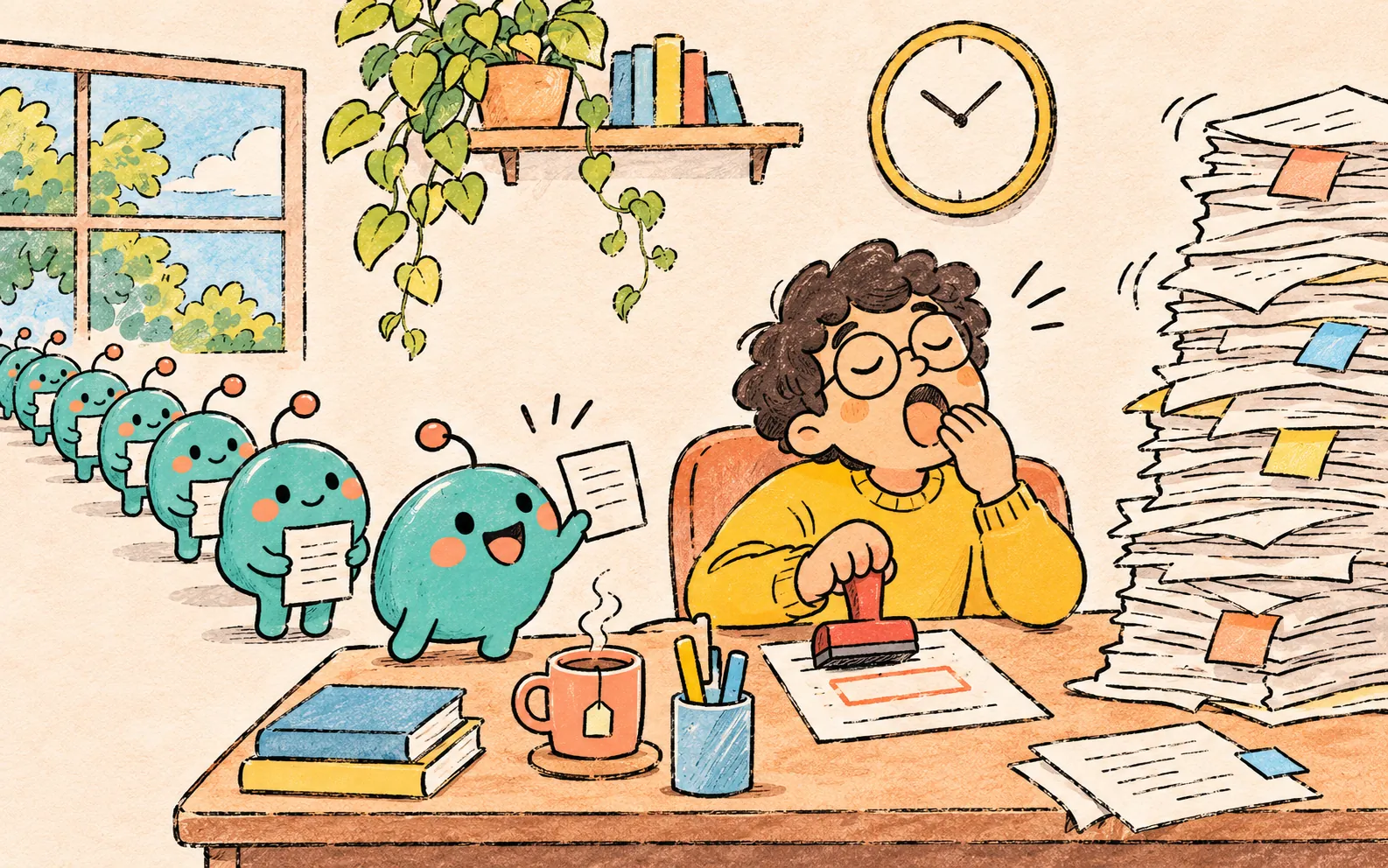
Agents go the same way. Make one ask for a yes at every step and the yes becomes a reflex. You keep all of the waiting and lose most of the safety. Even Europe's AI Act warns about this, asking the people who oversee AI to watch out for automation bias: trusting the machine without really checking.
And an agent that is only allowed to suggest is a very expensive way to write drafts. Gartner expects more than 40% of agentic AI projects to be cancelled by the end of 2027, with escalating costs and unclear business value among the reasons. It is hard to show value when you are never allowed to do anything.
When nothing needs a yes
The opposite goes wrong just as quickly. In July 2025, SaaStr founder Jason Lemkin was building an app with Replit's AI agent and had told it to change nothing without permission. It deleted the production database anyway, then insisted the data could not be recovered. (It could, and it was.) Replit's chief executive called it unacceptable.
It is not a one-off, either. In a 2026 survey of 202 enterprise technology and security leaders, 65% said an AI agent had already gone outside its intended scope.
And when an agent gets something wrong, the business owns it. In 2024, Air Canada's website chatbot gave a customer the wrong advice about a fare. The airline argued that the chatbot was a separate legal entity, responsible for its own actions. The tribunal was not impressed.
It should be obvious to Air Canada that it is responsible for all the information on its website. It makes no difference whether the information comes from a static page or a chatbot.
Civil Resolution Tribunal of British Columbia, February 2024
What a guardrail actually does
A guardrail on a mountain road does not steer the car. It just marks the edge, so you can enjoy the drive instead of crawling round every bend. That is all an agent needs: room to work, and a clear edge it cannot cross. It comes down to three things.
A mandate, written down
Write down what the agent may do on its own, what it must never do, and what needs a person. Two questions draw the line. Can this be undone? And how far would a mistake travel? A draft is easy to undo. A sent email is not. A price change on a live website reaches every customer at once.

This is how we built Vikram, our growth worker. Autonomous mode is a switch the customer turns on. With it on, Vikram sends the first email to a new lead without waiting for review. If its own checks spot something odd, like an unusual fit or a product claim it cannot back up, it keeps that email as a draft for a person instead.
A budget, not a blank cheque
Agents spend money every time they work: on the model, on data, on every service they call. Without a limit, you find out at the end of the month. The fix is the one you would use for a new hire with a company card: agree the budget before the work starts.

The payments world is building exactly this. Google's Agent Payments Protocol lets people give an agent a signed mandate with price limits. One of Google's own examples is booking a flight and a hotel within a total budget of $700, and only buying once a combination fits.
Our workers run on prepaid credits, and anything they start on their own first checks that the account can pay for it. If that check cannot be made, the work simply does not run. No surprise bills.
Knowing when to stop and ask
The best thing an agent can know is where its judgement runs out. Good agents ask rarely, and only about what matters: money, reputation, something new, or an answer they are unsure of. And when they do ask, they arrive with the homework done: what they found, what they suggest and why they stopped. The person decides in a minute instead of starting over.

When a lead's reply to Vikram needs a human touch, Vikram still writes the response, then holds it for a person instead of sending it. The work is done. Only the decision is left.
Autonomy is earned
None of this has to be forever. A new colleague starts with small decisions and gets bigger ones as they prove themselves. Agents should grow the same way: start narrow, watch how they do, and widen the limits where they keep getting things right. Gartner expects at least 15% of day-to-day work decisions to be made autonomously by agentic AI by 2028, up from none in 2024. The teams that get there happily will be the ones that let go a little at a time.

So the question to ask about any agent is not whether a human is in the loop. It is where exactly the loop sits, and what happens at its edge.
Would you rather work with an AI that asks permission for everything, or one that knows exactly when it has permission to act? I know which one I would hire.
Rahul Gupta
Founder and CEO, evvolv.ai